
Paul Ainsworth’s Story by his family
Our journey is sadly over and tragically we have lost Paul and we are now living with the reality of what has happened. We would like to share our family experience and the devastation that comes from a clear cell sarcoma (CCS) diagnosis.
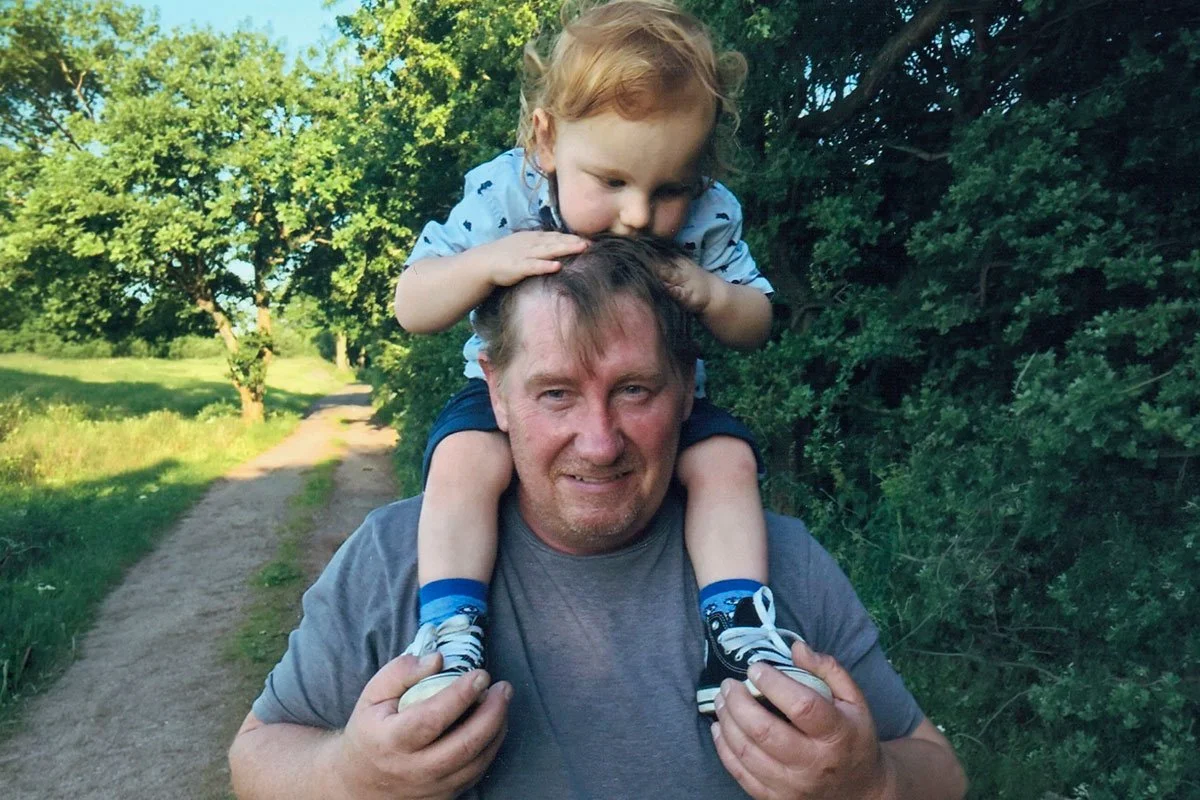
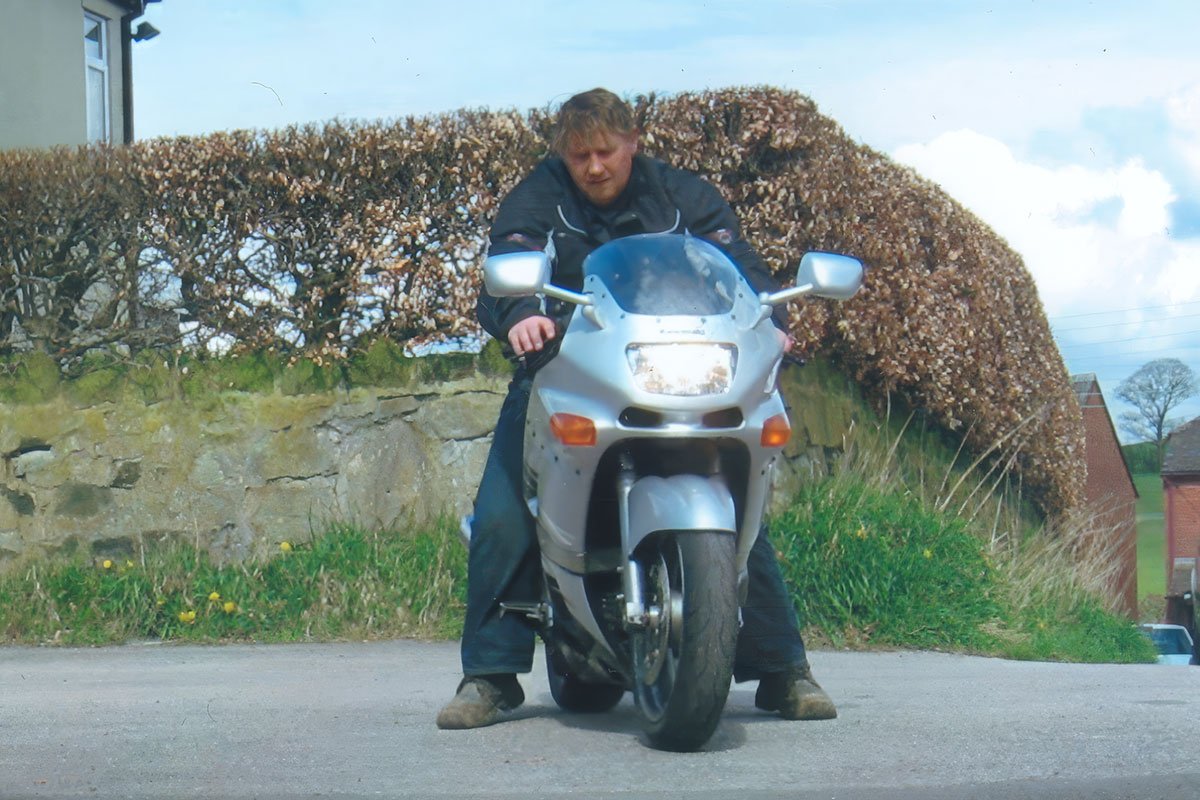
Where do we start? Paul was a truly hard working, devoted husband, father and grandad. He absolutely loved life and lived to provide for his family.
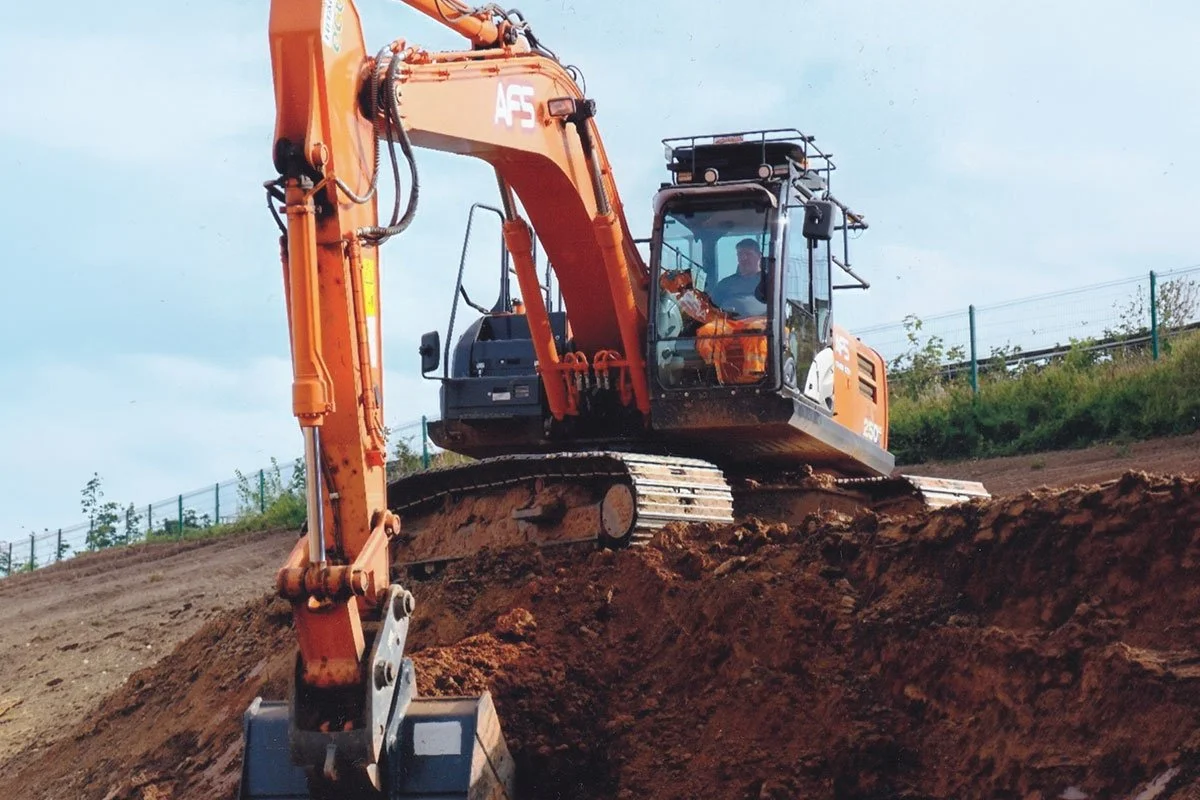
Paul had worked as an excavator driver from the age of eighteen. He was extremely talented and had only missed one week of work in his life, which was when his father passed away. Even during his battle with CCS, he worked until five weeks before he passed. He always said “if I have to stop working it will kill me” and how right this proved to be.
Paul's CCS journey began with a lump growing on his forearm, which had been there since the summer of 1991, when he had a mosquito bite in Corfu. It was under the skin and the size and shape of a small pea and really nothing to be concerned about.
Forward to spring 2022, we noticed this lump was growing, itwas now red, firm and occasionally painful. Paul was having a review at his GPs, so whilst there, we asked the locum doctor to look at the lump.
His response was, “it's nothing” and “with the way things are with the NHS, they would not remove it, as it would be classed as cosmetic surgery.”
Although we have trust in doctors and we want to believe that they know best, we had our doubts and whilst doing an internet search, sarcoma popped up, but so did its rarity.
Forward on two months, Paul was having a medication review and we asked his GP to check his arm again, as the lump was becoming noticeably bigger, firmer and discoloured.
The GP did referred Paul for an ultrasound scan but unfortunately, put it through on a standard referral, so he waited five months before receiving an appointment.
The results were inconclusive, so an MRI scan was arranged but the lump was diagnosed as a benign growth and an orthopaedic surgeon was asked to remove it. Fortunately,before he performed the operation, he asked for a second opinion from The Royal Orthopaedic Hospital in Birmingham, where a biopsy was taken that finally led to Paul’s diagnosis of CCS - nearly twelve months to the day after presenting with a “growing” lump to his GP.
Paul had surgery in March 2023 to remove the lump, with clear margins, and two lymph nodes, one of which showed CCS tumour cells. It had metastasised. We soon learnt that there was no treatment, beyond surgery, for this cancer, although we were also assured that if it did reoccur then it would simply be removed.
Looking back, we now feel we were naive about the aggressive nature of CCS and we began a life of MRI scans, chest x-rays and fingers crossed every three months.
In May 2024 Paul had a reoccurrence in several places within the same arm and in his armpit. Again, the only hope was extensive surgery, which he underwent in August 2024, which was followed up by radiotherapy in November 2024. However, Paul had a follow-up PET scan in January 2025 which revealed that the that CCS had travelled to his hip, spine, rib and clavicle.
The disease was very aggressive at this point and Paul was placed on palliative care. Even being as fit and as strong as he was - he was still working five days a week - there was absolutely nothing available that could help him or slow the progression of the disease.
Paul fought a brave battle. He had extraordinary strength in both body and mind and he had the will and to fight, but the lack of research and an effective treatment did not help him. So, once the cancer began to spread, the doctors had nothing to offer him and the light in Paul dimmed.
Paul was in such pain at the end of his life but there was no effective drug to manage this. The trauma we witnessed will have a lasting impact on us as a family.
Paul said “I know you can't cure me I just want you to ease my pain.”
Surely this was not much to ask?
But to watch him suffer and to hear medical professionals saying: -
“Well, it's so rare.”
“We haven’t seen anyone with this cancer before.”
“The drugs we are using to try to control the pain just aren’t working.”
“You’re one in a million.”
“What do you want us to do?”
It's hard for us to express the feeling we are left with as a family. The “what ifs.” The “if only.” “Why Paul.” And “was there anything we could have done to change the outcome.”
The loss of Paul has left a massive void in our family. He will be forever loved and missed, but we will always ask ourselves these questions.
Sadly, whilst coming to terms with the loss of Paul we also lost my much-loved Dad, who struggled with Paul’s death. Paul had been like a son to him! He never accepted or wanted to contemplate that Paul would die until the morning of his death.
As a family we want to support the Edward Showler Foundation to invest in research and to find some hope for families like ourselves that have been absolutely devastated by this little-known cancer.
Paul has a grandson called Isaak, who knew Paul’s physical strength and with a child's mind, believed his Grandad “Digger” could get better and that the doctors could help ease his pain. It has been difficult to explain to him the difference between more common cancers, that can be treated and CCS, which can’t. If treatments had been available, then his grandad would have taken them and possibly have lived.
As a family we don't want Isaak to believe that cancer is a death sentence. For this reason, we would like to send the kind donations that family and friends gave in memory of both Paul Ainsworth and Douglas Abell.
Jayne, Laura, Amy, Sophie, Isaak and families XX