
Siân’s Story by her Dad
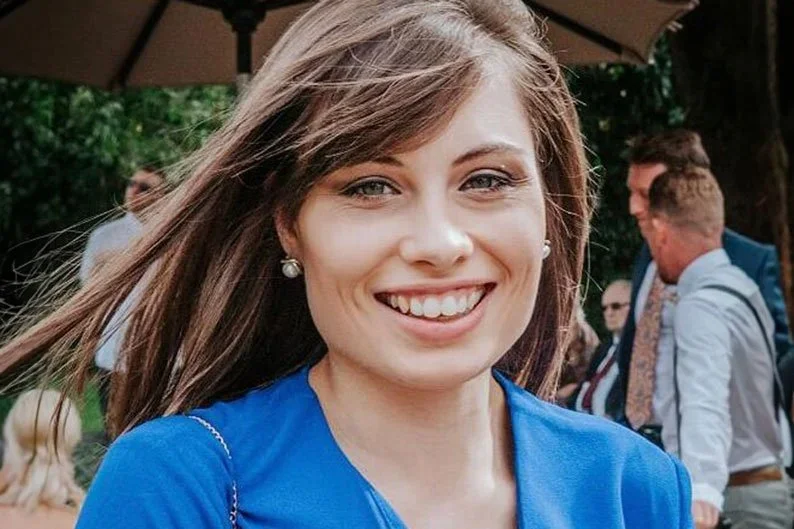
It is a cliché that no parent should ever have to bury their children, but here’s the thing about clichés – they have the hard edge of truth at their core.
When Sian passed away in the early hours of Tuesday 18th February 2020, she was 30 years, 7 months and 2 days old. I can vividly rewind to the day she was born on 16th July 1989, when her birth was totally without drama (something Sian’s Mum, Sharon, might dispute a little, but even she will accept that in the scheme of these things, it was as straightforward as giving birth can ever be). Shortly after she was born, I held her, and faced her towards a mirror, for her to see herself, and to ever so slightly marvel at my own expression at the sight of this minor miracle. She was quiet, peaceful, content, untroubled and utterly untroubling. She would largely remain that way right up to the point that she died.
If I could properly type in Welsh, Sian would have a little ‘roof’ above the ‘a’ in her name. This is a circumflex. Apparently, it denotes that vowel as being ‘long’. It should also have given some people a bit of a clue that you don’t pronounce it ‘See-ann’ or ‘Cy-ann’ – or worse still, have people assume that your name is ‘Shaun’ – it isn’t, it wasn’t, and it used to have Sian (pronounced ‘Sharn’) rolling her eyes. She would politely correct them if she could, although sometimes I am sure she just thought ‘Oh, I can’t be arsed…’. She rarely got visibly cross with people, because she was unfailingly polite, kind, somewhat shy and demure. She didn’t shout about herself, that would have been vulgar. But she should have done, because, oh boy, did she have a lot to shout about…I think of the circumflex as a little, discreet indicator of personality, individuality, maybe a degree of defiance, and it seems so wonderfully apposite for Sian.
Sian was a creative soul. Like too many graduates, she scratched around for a job or indeed any experience where she could use her Visual Communication (Graphic Design in old parlance) degree. She managed to land a paid internship at a company in Cambridgeshire who produced audio and fashion accessories, and in the process, completely redesigned their brochure into something rather more modern and cool. Not long after, she beat off a whole host of other candidates to land a job in the marketing department of a global agro-chemicals company in Oslo. That very much suited her skill set, and life was sweet; she lived with her Norwegian partner (they met at University), and enjoyed the sort of work-life balance that only the Scandinavians seem able to perfect – until a lump appeared in the ankle of her right leg in 2014. Tests revealed not only cancer, but a very, very rare cancer. And so began our ultimately tragic journey…
Sian was wonderfully looked after and treated by all medical staff, doctors and consultants at The Royal Marsden, and there were a number of times when we all thought we had cracked it. She was at least given more time than many others afflicted by Clear Cell Sarcoma (a fact we almost certainly didn’t appreciate at the time), but ultimately, we could not defeat it.
Cancer is a sinister, random entity, completely without dignity, humour, reasonableness, fairness or compassion - it lacks anything remotely human, it is without soul. It is a disease about which we still know so little, and it can leave you feeling utterly powerless. It is the most malevolent thing that I have ever encountered.
Sian was not particularly remarkable, just like I am not particularly remarkable, nor is my surviving daughter or Sian’s mum. There will be many more people in the world who would be classified as extraordinarily brave, resilient and selfless. I don’t know any of them, but I did know Sian, and she was, far and away, the bravest, most extraordinary person that I ever met.
Dealing with the death of a child, no matter what age they are, is hellish and relentless. Dealing with cancer is lonely, frustrating, frightening, painful and unremitting. If I could have stood in Sian’s shoes and experienced it all for her, I would have done in a heartbeat. That, of course, just wasn’t possible.
At the moment at least, I can’t offer any great hopes to other people, but for CCS sufferers, the work of the ESF is now making great strides towards a much betterunderstanding. But maybe there are things to be learnt. I learnt some things from Sian. I learnt that maybe we can be more empathetic, caring, more resilient, stronger. But I also learnt that sometimes there is absolutely nothing you can do.
In the aftermath I constantly questioned, and constantly came up with no answers; why is my daughter no longer here? What could I have done differently? Could/should I have loved and supported her more? My unfailing answer to the latter is ‘Yes’ – everyone else remains perplexed as to why I should think that. But I will forever think that there musthave been more that I could have done. Any parent who has lost a child will know that feeling of continual guilt.
Since Sian’s death, many of us have struggled to come to terms with her loss, while the process of watching her rapid deterioration, dealing with the aftermath of her passing, and the realisation of her permanent absence has been life changing.
I have recently pondered on the whole process and (I hate to use this grotesquely overused word) journey, to try to make some sense of the pain, partially as a means towards some sort of catharsis, partially as a way of trying to paint an indelible picture of my daughter, but also as a possible means to help others in a similar position understand that they are not alone in their grief and desperation; that what they feel and how they express it is not unusual, odd or wrong. I also have a hope that it might help those who know of someone who is dealing with a bereavement, because – to be blunt – we are very, very bad at that.
Since Sian’s passing, we have undertaken a number of charity fundraising events for the ESF (one of Sian’s last wishes is that we organise a fundraiser to try and help others), the first one of which exceeded all expectations when some 70 participants flooded local roads in their purple T-shirts (purple was Sian’s favourite colour) on a 10 mile walk in her memory. She would have been absolutely stunned and chuffed by the event. It was a fitting tribute, the support we had was outstanding, and it raised way more than we dreamed of. But it could never disguise the fact that Sian is no longer here with us. That terrible emptiness will live with us until we draw our own last breaths…
But, we have to hope. We have to hope and believe that the research being done by UCLH for the ESF (and which is now expanding to include other institutions and philanthropic groups) will provide some answers on how to effectively treat CCS, so that it is not the dark sentence that it currently appears to be. If we can do that, it will be a fitting legacy for Ed, Sian, Sharni and others who have been taken from us way too soon.